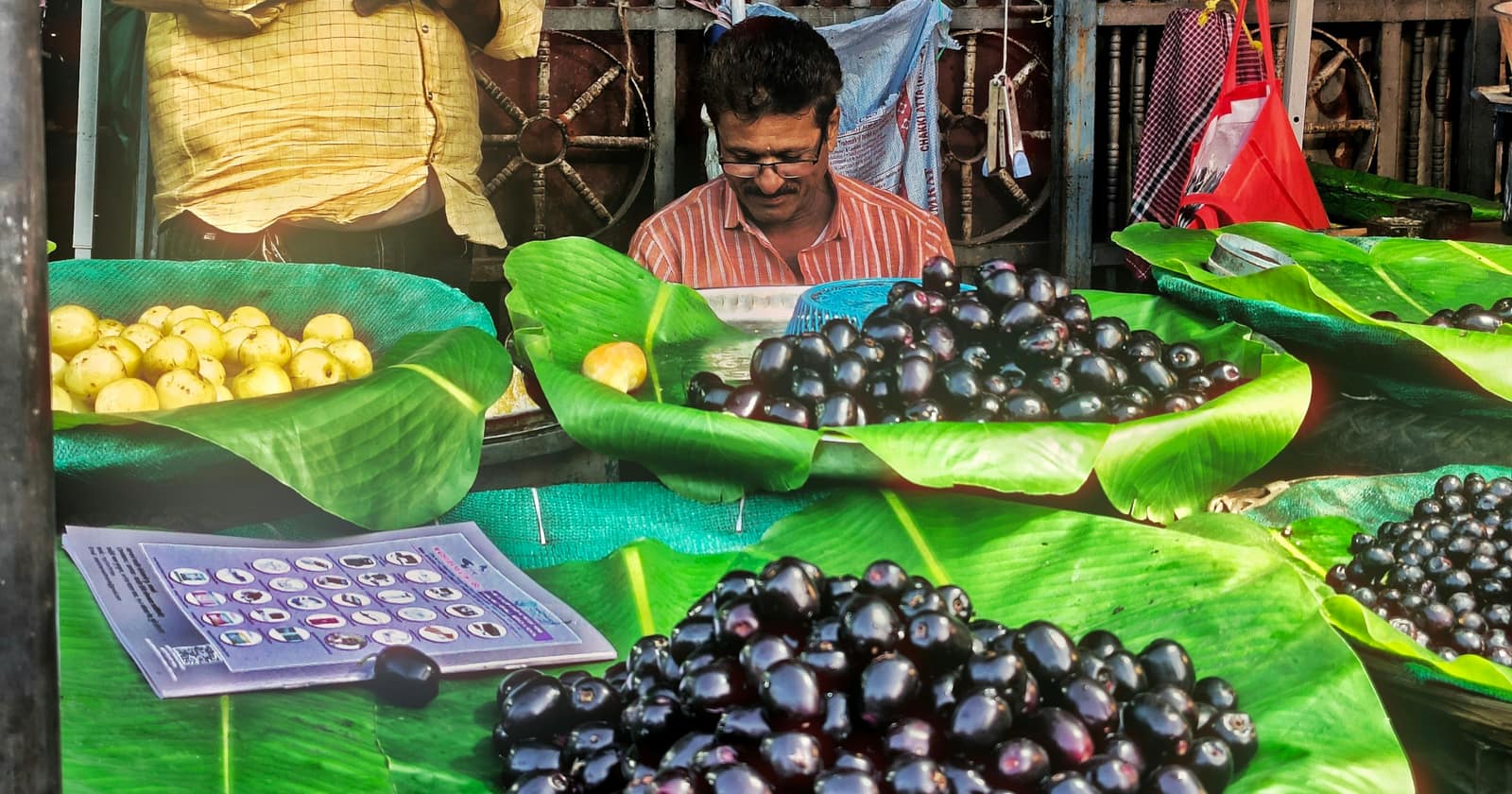
Walk through any Indian market at eight in the morning and you'll see the businesses this section was written for. A fruit seller weighing jamun on a banana leaf. A tailor who has had the same corner for twenty years. A small trader with a UPI QR code taped to the counter, and a cash box beneath it.
None of them keeps a double-entry ledger. For decades the law's answer has been presumptive taxation: declare a fixed share of turnover as profit and skip the books and the audit. Under the Income-tax Act, 1961 that was sections 44AD, 44ADA and 44AE. From tax year 2026-27, all three live in one place, section 58 of the Income-tax Act, 2025.
The good news for anyone who already uses it is that the figures have carried over almost untouched. What has changed is the numbering, the layout, and one or two words that matter.
Three schemes, one Table
Section 58(2) sets out a Table with three rows.
- Row 1, business, formerly 44AD. For an "eligible assessee", deemed profit of 6% of turnover received by bank or online mode and 8% of the rest.
- Row 2, goods carriages, formerly 44AE. For someone who owns no more than ten goods carriages, ₹1,000 per ton of gross vehicle weight or unladen weight per month for a heavy goods vehicle, and ₹7,500 per month for any other.
- Row 3, professions, formerly 44ADA. For a "specified assessee", deemed profit of 50% of gross receipts.
In every row, if the profit actually earned is higher, that is the income. The deemed figure is a floor, not a ceiling.
The limits, and the 5% that doubles them
For a business, the scheme applies where turnover does not exceed ₹2 crore, or ₹3 crore where the amount received in cash does not exceed 5% of turnover. For a profession, the limits are ₹50 lakh, or ₹75 lakh on the same 5% condition.
Section 58(9) adds one detail that catches people out. A cheque or bank draft that is not account payee counts as cash. A trader who takes crossed-but-not-account-payee cheques from wholesale buyers can find that the 5% was never met.
The 6% rate has its own timing rule. It applies to turnover received by bank or online mode during the tax year or before the due date of the return. A sale made in March and paid by UPI in May still earns the lower rate, as long as the money arrives before the return is due.
Who can use it
- A business (Row 1) is open to an individual, an HUF or a firm, other than an LLP, that is resident in India, has not claimed a deduction under Chapter VIII-C for the year, and does not carry on a specified profession, earn commission or brokerage, or run an agency business.
- A profession (Row 3) is open to a resident individual or firm, other than an LLP. An HUF can't use it.
- "Specified profession" is defined in section 62(4): legal, medical, engineering, architectural, accountancy, technical consultancy, interior decoration, information technology, company secretary, and any other profession the Board notifies.
The Finance Act, 2026 removed one of the old conditions for Row 1, the bar on anyone who had claimed the special economic zone deduction under section 144. The other conditions stand.
The five-year rule
Section 58(7) keeps the rule that turned 44AD into a commitment. If an eligible assessee declares profit under Row 1 in one year and then, in any of the next five tax years, declares profit that does not follow the scheme, they cannot use the scheme again for the five tax years after that. For those years, if total income is above the exemption limit, section 58(8) requires books and a tax audit.
The scheme is a floor you choose. Leave it within five years, and it is not available again for five more.
Where it meets the tax audit
Section 63 is the successor to 44AB. It exempts anyone who declares profit under section 58(2) from the ordinary audit. But it adds a separate trigger, Table serial 2: an audit is required where profit from a presumptive business or profession is claimed to be lower than the deemed profit. Section 58(3) says the same from the other side: declaring lower, with income above the exemption limit, means keeping books under section 62 and getting them audited under section 63.
One instalment of advance tax
Under section 408(2), anyone declaring income under Row 1 or Row 3 pays the whole of their advance tax in one instalment, on or before 15 March. No June, September or December instalments are due. If less than the full amount is paid by then, section 425(3) charges interest of 1% on the shortfall.
Work out your own
Does section 58 apply, and what does it deem?
Within section 58: deemed profit ₹14,60,000
Cash is 4.2% of the total, so the limit is ₹3,00,00,000, the higher one for receipts that are 95% or more non-cash.
6% of ₹2,30,00,000 received by bank or online mode, plus 8% of the remaining ₹10,00,000. If the profit actually earned is higher, that is the income. Declaring lower, with income above the exemption limit, means keeping books and a tax audit. Advance tax is due in one instalment, by 15 March.
Income-tax Act, 2025, sections 58, 62(4), 63 and 408(2), as amended by the Finance Act, 2026. Eligibility also turns on who you are (a resident individual, HUF or firm other than an LLP for a business; a resident individual or firm for a profession) and on not earning commission, brokerage or agency income. Nothing you type leaves this page.
Where this comes from
Everything here is from the Income-tax Act, 2025 as amended by the Finance Act, 2026: section 58, section 62(4), section 63 and sections 408 and 425. Section 58 applies from tax year 2026-27, so returns for 2025-26 and earlier are still filed under sections 44AD, 44ADA and 44AE of the 1961 Act. Which scheme suits a particular business is a judgement about its real margins, and the section leaves that choice to the taxpayer.
Questions this answers
What is the section for 44AD in the new Income-tax Act 2025?
Section 58. Its Table covers what were sections 44AD (Row 1), 44AE (Row 2) and 44ADA (Row 3) of the 1961 Act, from tax year 2026-27.
What is the turnover limit for presumptive taxation under section 58?
₹2 crore for a business, or ₹3 crore where cash receipts do not exceed 5% of turnover. For a profession, ₹50 lakh, or ₹75 lakh on the same condition.
What rate of profit applies under section 58?
6% of turnover received by bank or online mode, and 8% of the rest, for a business; 50% of gross receipts for a profession; or the profit actually earned if higher.
Can an LLP use presumptive taxation under section 58?
No. Row 1 is open to an individual, HUF or firm other than an LLP, and Row 3 to an individual or firm other than an LLP.
When is advance tax due under section 58?
The whole amount, on or before 15 March, under section 408(2).
Look up any section
The Income-tax Act 2025 section finder lists every 1961 TDS and TCS section with its 2025 section and Table serial, the rate and threshold as enacted, and the page of the Act, with a TDS rate chart and a TCS rate chart.
Read next
- Capital Gains Under the Income-tax Act, 2025: The Rates, Where Sections 54 and 54F Went, and Why Buybacks Changed Again
- Section 194Q in the Income-tax Act, 2025: Now Serial 8(ii) of Section 393(1), and the Two Tests Behind It
- Old vs New Tax Regime for Tax Year 2026-27: The ₹12 Lakh Line, Where 80C Went, and the One-Way Door